

Beyond being an exhilarating sport, horse racing has contributed more to everyday language than most people probably realize. From the racetrack to ordinary conversation, phrases born out of the world of horse racing have galloped into, and stayed in, the language people use every day.
So saddle up and test your knowledge of 10 popular phrases that originated on the turf.
1. Neck and Neck
When two horses run side by side with little to no space between them, it’s referred to as a neck-and-neck race. The phrase has carried into everyday language to describe any close competition where the lead is too tight to call.
(See also “Down to the Wire” and “Dead Heat” below.)
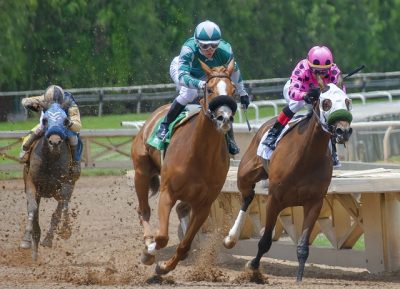
Two Horses Racing Neck and Neck
When two horses run with no visible space between them, it's called a neck-and-neck race, a phrase that now describes any close competition.
2. Dark Horse
Originating from the unpredictability of horse racing, a dark horse refers to a competitor who is relatively unknown or underestimated but could surprise everyone with a win. An underdog, by contrast, is expected to lose.
3. Down to the Wire
In horse racing, the finish line is often marked by a wire. When a race stays intense and undecided until the very end, it’s said to go down to the wire. Today, the phrase describes any situation that remains uncertain until the last moment.
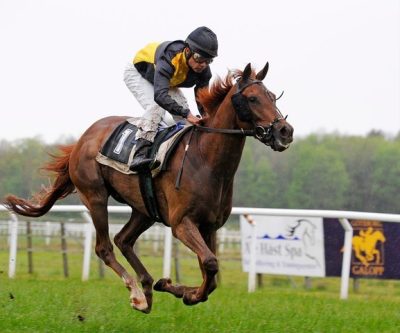
Jockey and Horse Racing Down to the Wire
A race that stays undecided until the very end is said to go down to the wire, named for the wire marking the finish line.
4. Furlong
Derived from Old English, a furlong is a unit of distance in horse racing, roughly equal to one-eighth of a mile. Outside the racetrack, it’s commonly used to describe linear distance, especially in rural settings. According to the University of Nottingham, a furlong was originally considered the distance an ox could plow without resting.
5. Winning By a Nose
When a horse wins by the smallest possible margin, often just the length of its nose, it’s described as winning by a nose. The phrase has been part of everyday conversation to describe a close victory since around 1900.
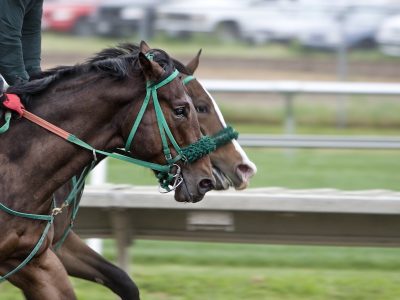
Horse Winning a Race by a Nose
Winning by a nose describes the smallest possible margin of victory, a phrase that has been in everyday use since around 1900.
6. In the Homestretch
The final stretch of a horse race, leading up to the finish line, is called the homestretch. Specifically, it’s the last part of the racecourse from the final turn to the wire. Figuratively, the phrase refers to the final phase of any endeavor, where the end is in sight and pushing forward will close it out.
7. Under the Weather
Originally, this phrase referred to a horse not performing at its best due to poor weather conditions such as temperature, humidity, wind speed, and direction. Today, it describes a person feeling slightly unwell.
8. Hold Your Horses
This idiom originated from horseback riding, horse-drawn carriages, and racing, where it meant the literal need to control horses. Today it advises patience and restraint, and is a common reminder to slow down or wait.
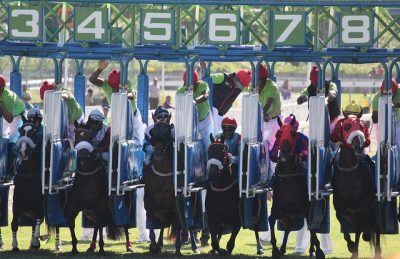
Horses at the Starting Gate Before a Race
Hold your horses originated from the literal need to control horses before a race or during carriage driving.
9. Dead Heat
When two or more horses finish a race at the exact same moment, it’s called a dead heat. Outside of racing, the phrase describes any situation ending in a tie or deadlock.
10. The Triple Crown
In horse racing, the Triple Crown is awarded to a horse that wins three specific races: the Kentucky Derby, the Preakness Stakes, and the Belmont Stakes. Used outside of horse racing, the phrase describes a rare achievement in any field.
In Conclusion
The next time one of these phrases comes up in conversation, there’s a little bit of the racetrack in it. From the thrill of the track to the vocabulary of everyday life, these expressions carry the turf’s history into ordinary language. Whether you’re a racing enthusiast or simply enjoy a good metaphor, the lasting impact of equestrian lingo is hard to deny.
From the Paddock to the Brush: Grooming’s Place in Racing Culture
Almost every phrase above comes from the moments around a race, including the gate, the stretch, the finish. But racing culture has another tradition that rarely makes it into the highlight reel: the grooming routine before and after every race.
A racehorse is groomed thoroughly before being saddled, both to check the horse over physically and to settle a horse that may be feeling the energy of race day. After the race, walking a horse out and grooming it down is standard practice. It helps the horse cool gradually, removes sweat and dirt accumulated during the race, and gives handlers a chance to check for any signs of strain or injury that adrenaline may have masked during the run itself.
This same principle applies just as much outside the racetrack. Thorough grooming before and after exertion, whether it’s a competition, a long ride, or just a hot day in the pasture, is when a horse’s coat and skin condition are easiest to assess closely.
The WaterWisk removes sweat and water efficiently from every part of a horse’s body, including the bony hips and legs where traditional scrapers tend to catch or drag. For removing loose coat and dead hair during a thorough grooming session, the 8″ EquiGroomer covers the full body without pulling or irritating skin, even on a horse that’s a little keyed up after a hard effort.
No matter which of these phrases ends up in conversation next, one thing about horse ownership hasn’t changed since the earliest days of the sport: a horse that’s groomed well after exertion comes out ahead of one that isn’t.