If you’ve ever owned a cat, or let’s be honest, been owned by one, you’ve experienced the Great Closed-Door Drama. There’s a paw under the door, some meowing, and maybe even a little artistic scratching at the offending barrier.

So what’s the deal? Why does your seemingly aloof, independent cat suddenly become obsessed with getting through a closed door?

A survey conducted by The Cat Site found that 82% of cat parents reported their cats regularly tried to barge into rooms with closed doors. So if this sounds familiar, you’re far from alone.
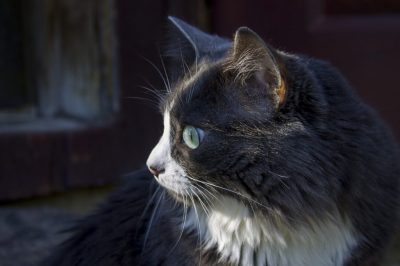
Cat with green eyes staring intently at a closed door

Curious Cat Staring at Closed Door

A closed door is often the most interesting thing in the house, according to a cat

Here are the four real reasons behind your cat’s door-hating behavior.

Cats Are Furry Control Freaks

Doors represent the one thing cats love to hate: a lack of control. A closed door means they can’t come and go as they please, which feels like a personal affront to their sense of authority over the house.
 

It’s About Curiosity

Notice how your cat shows zero interest in a room until the door closes? Cats are naturally curious, and a closed door is one of the most reliable ways to spark that curiosity. The question becomes irresistible: what’s happening in there that I’m not part of?
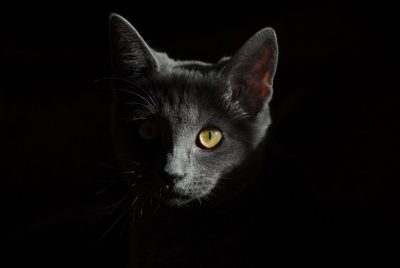
Small black cat partially hidden in darkness

Black Cat Partially Hidden in Shadow

Black cats carry their own folklore, separate from the universal closed-door struggle

On the subject of doors and superstition: it’s also Black Cat Awareness Month. Since ancient Greece, black cats have been linked to witches, bad luck, and Halloween folklore, though sailors and their wives in Great Britain actually believed the opposite, keeping black cats aboard ships and in their homes for good luck. If you share your home with a black cat, it’s worth keeping them indoors around Halloween, when their safety risk goes up.

Feline FOMO

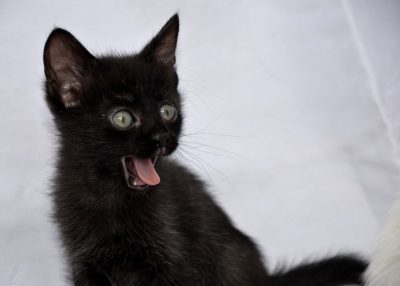
Black kitten with wide green eyes looking startled

Surprised Black Kitten with Green Eyes

Cats are masters of feline FOMO when they sense they're missing something

Cats can seem detached, but closed doors trigger something close to fear of missing out. If there’s something happening that they can’t see or hear, it might be the greatest thing that’s ever happened. Every closed door raises the same question in a cat’s mind: what am I missing right now?

It’s a Bid for Attention

Sometimes the closed door isn’t really the issue. Cats often use the scratching and meowing as a direct way to get a response from their owner, even if there’s nothing of interest behind the door at all. It works because, often, it gets the door open.

So, Why Do Cats Really Hate Closed Doors?

It’s rarely about the door itself. It’s about control, curiosity, and the nagging feeling that something interesting might be happening without them. The next time you close a door and hear that familiar scratching, you’ll know exactly what’s going on.

If the behavior becomes a real problem rather than the occasional dramatic flair, Class Act Cats has practical tips on helping a cat adjust.


A Calmer Cat Starts With a Comfortable One

A close-up shot of the EasyGroomer Grooming Tools

A cat that’s stressed, bored, or under-stimulated often expresses it more dramatically, whether that’s at the door or elsewhere. Regular grooming time is one of the simplest ways to add calm, positive interaction to a cat’s day, and a few extra minutes of attention can take the edge off a lot of that door-related drama.

EquiGroomer’s blade is designed to mimic a cat’s tongue, which is part of why most cats settle into it quickly rather than fighting it the way they do with other grooming tools. If your cat could use a few more calm, comfortable connection points in the day, the EasyGroomer for cats is worth a look.