

The cat’s meow is renowned for its expressive tones, especially when interacting with humans. Unlike their communication with fellow felines, which relies heavily on body language and scent, cats frequently use vocalizations to convey messages to humans. This behavior has deep evolutionary roots and serves multiple functions in the human-cat relationship.
Did You Miss This Blog Post? “Cat Sounds: How to Decipher Your Cat’s Meow and More!”
Evolutionary Background
Kitten Communication: Kittens meow to solicit attention from their mothers, signaling needs such as hunger or discomfort. As they mature, this vocal behavior typically diminishes in feral cats but persists in domesticated cats when interacting with humans.
Domestication and Adaptation: Approximately 10,000 years ago, cats began cohabiting with humans, leading to a unique domestication process. Unlike dogs, which are selectively bred for specific traits, cats underwent self-domestication, adapting behaviors that enhanced their survival alongside humans. Vocal communication, particularly meowing, became a tool to capture human attention and foster bonds.
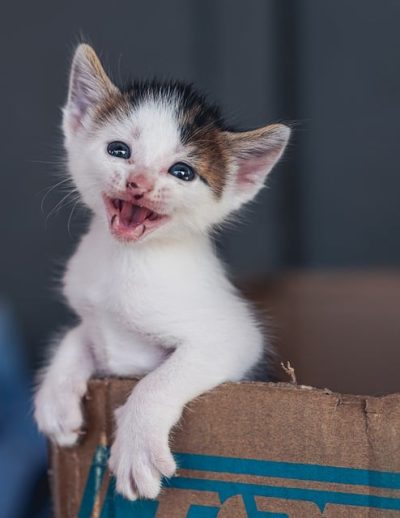
So, Why Do Felines Meow at Humans?
Soliciting Attention: Cats meow to initiate interaction, whether for play, petting, or companionship. This behavior mirrors the way kittens seek attention from their mothers. (Source: LiveScience.com)
Expressing Needs: A meow may indicate hunger, a desire to go outside, or a request for a clean litter box. Cats learned their vocalizing elicits a response from their human companions, reinforcing this behavior.
Greeting Behavior: Some kitties meow to greet their owners when they return home, displaying excitement or affection. This vocalization serves as a bridge in human-feline social interactions. (Source: Purina.com)
Health Concerns: Excessive or unusual meowing can signal discomfort, pain, or underlying health issues. It’s essential to monitor changes in vocalization patterns and consult a veterinarian if concerns arise.
ICYMI: Hemingway’s Cats: The Famous Writer and His Love of Cats
The Science Behind the Meow: A Closer Look
Learned Behavior: Research indicates cats develop meowing as a communication tool for humans. Feral cats, which have minimal human interaction, meow less frequently, suggesting this vocalization is a learned behavior tailored to human companions. (Source: LiveScience.com)
Acoustic Variations: Cats can modify their meows in tone, pitch, and duration to convey different messages. For instance, a cat may use a shorter, higher-pitched meow to express hunger and a longer, lower-pitched meow to indicate displeasure. This adaptability enhances their ability to communicate effectively with humans.
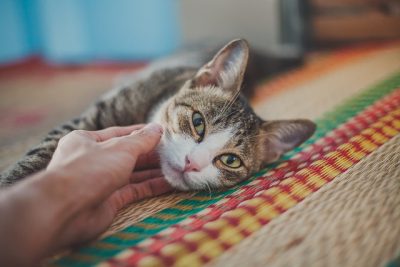
How to Understand Your Cat’s Meows
Contextual Clues: Observing the circumstances surrounding a cat’s meow can provide insights into its meaning. Consider the time of day, recent activities, and the cat’s body language to interpret the message accurately.
Consistency and Routine: Establishing consistent responses to specific meows can help you understand and reinforce desired behaviors. For example, feeding a cat at set times can reduce incessant meowing for food.
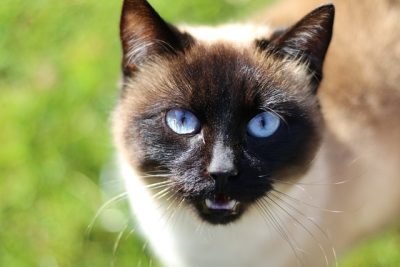
Breed Differences: Some cat breeds are naturally more vocal than others. Siamese cats, for instance, are known for their talkative nature, while others may be more reserved. Recognizing breed tendencies can help set expectations for vocal behavior. (Source: MarthaStewart.com)
Final Thoughts
Meowing is a multifaceted communication tool cats have adapted primarily for human interaction. By understanding the nuances of feline vocalizations and the contexts in which they occur, cat owners can foster stronger bonds and effectively fulfill their kitty’s needs for a more harmonious co-existence.
Is Your Cat Meowing to Be Groomed?
A meow directed at a person is rarely random. Cats vocalize because they have learned it works, and one of the most common reasons a cat seeks out a person is to be touched, petted, or brushed. If a cat consistently meows and then leans into your hand or rubs against you, grooming attention is very likely part of what is being requested.
Self-grooming, as effective as a cat’s tongue is for surface maintenance, cannot reach the dead undercoat that builds up close to the skin. That is where brushing becomes something a cat actively seeks rather than tolerates. A cat that meows for attention and then visibly relaxes during a brushing session is communicating exactly what the research above describes: vocalization as a learned tool to get a specific response from a person.
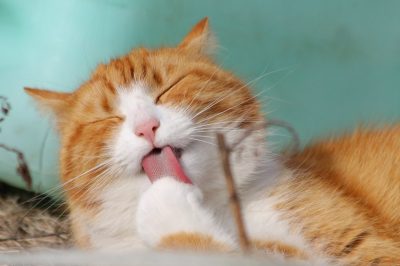
The 5″ EasyGroomer removes loose hair and dead undercoat with a micro-barbed blade that lifts in the direction of coat growth, similar to the mechanism of a cat’s own grooming. Most cats settle quickly once a session starts, and many begin to associate the sound or sight of the tool with the attention they were meowing for in the first place.