
Ernest Hemingway, the renowned author of literary classics such as “The Old Man and the Sea” and “A Farewell to Arms,” was not only known for his masterful prose but also for his deep love of feline companions. The story behind Hemingway’s cats is as intriguing as his novels, weaving together history, whimsy, and a touch of eccentricity.
A Literary Giant with a Feline Flair
Hemingway’s feline affinity dates back to the 1930s when he lived in Key West, Florida. Legend has it that a ship’s captain gifted him a six-toed cat (a polydactyl) named Snow White, marking the beginning of his love affair with these unique felines. These cats, often referred to as “Hemingway cats,” possessed extra toes resembling miniature snowshoes or mittens with a “thumb” on their paws.
Polydactyl cats are not a breed. This unusual paw trait can appear in any feline breed.
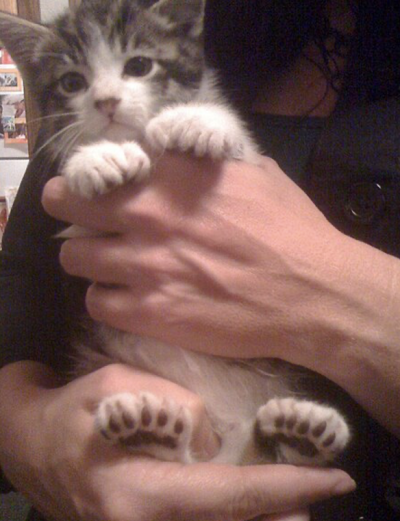
Hemingway Polydactyl Cat at Key West Museum
The Hemingway Home and Museum is home to approximately 60 free-roaming polydactyl cats, many descended from Hemingway's original felines.
Hemingway Home and Museum: A Polydactyl Haven
Today, the historic Hemingway Home and Museum has approximately 60 free-roaming polydactyl cats, many descendants of Hemingway’s original, beloved felines. Lovingly cared for by the museum staff, these cats have become integral to the attraction, enchanting visitors with their charm and distinctive extra digits.
While only half of cats have polydactyl paws (typically on their front feet, but sometimes on their back feet), all cats carry the congenital gene mutation in their DNA, making it possible to mother or father kittens with six or more toes. Polydactyl cats are pretty common. If one parent carries this mutation, there is a 50% chance the kittens will inherit it.
The presence of these unusual-pawed cats is an ongoing nod to Hemingway’s enduring legacy and his fondness for these unique creatures.
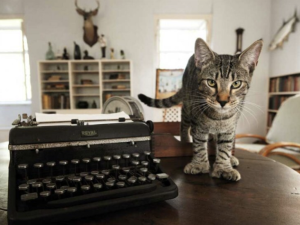
Kitten Sitting With a Typewriter
Hemingway's love of cats was as well-documented as his literary output — his Key West home became a sanctuary for polydactyl felines.
Purr-sonalities and Paw-sibilities
Each of Hemingway’s cats has its distinct personality, adding to the allure of the museum experience. From curious explorers to aloof loungers, these feline residents delight visitors with their antics and charm. Some cats have even gained celebrity status, with names like Archibald MacLeish, Gertrude Stein, and Pablo Picasso, paying homage to Hemingway’s literary circle.
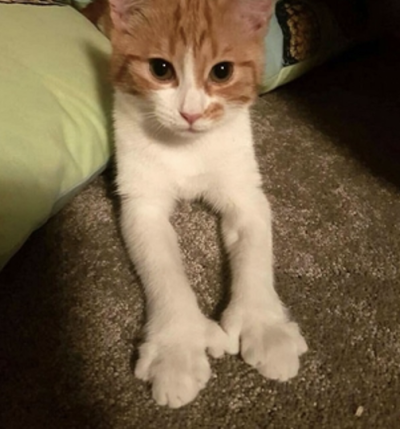
Polydactyl Cat with Extra Toes
Polydactyl cats have six or more toes on at least one paw. If one parent carries the mutation, there is a 50% chance kittens will inherit it.
A Legacy of Love and Literature
Beyond being the museum’s mascots, Hemingway’s cats symbolize the author’s enduring legacy and connection to Key West. Their presence reminds us of the quieter moments in his life away from the spotlight of literary acclaim.
In addition to their historical significance, Hemingway’s cats inspire visitors and admirers worldwide, fostering a sense of wonder and whimsy that transcends generations. As author and cat enthusiast Neil Gaiman once said, “A house is not a home without a cat”. Hemingway’s cats have made the Hemingway Home and Museum a place of warmth, hospitality, and feline charm.
If you find yourself in Key West, visit the Hemingway Home and Museum and experience the magic for yourself. Whether you are a literary enthusiast, a cat lover, or simply seeking a unique and memorable adventure, the museum offers a glimpse into the life and legacy of one of America’s greatest writers through the perspective of his beloved feline companions.
Cat Shedding and the Coat Beneath the Extra Toes
Polydactyl or not, every cat sheds. The extra toes are the visible novelty of Hemingway’s cats, but the coat is what requires ongoing attention from any cat owner who wants their animal comfortable and their furniture manageable.
Cats shed year-round with heavier cycles in spring and fall as the coat transitions between seasonal weights. During peak shedding, the loose undercoat builds up faster than a cat’s self-grooming can remove it. The result is matting behind the ears and at the base of the tail, increased hairballs, and dead coat transferring to every surface in the house.
What Grooming Does That Self-Grooming Cannot
A cat’s tongue removes surface-level loose hair but cannot reach the dead undercoat that sits close to the skin. That layer has to be physically lifted and removed with a tool that gets below the topcoat without scratching the skin. This is the difference between a cat that looks passably clean and a cat whose coat is actually in good condition.
For short-haired cats (which covers most domestic breeds including the mixed-breed cats that make up the majority of polydactyl populations), the grooming window during shedding season is short. The coat does not mat as visibly as a long-haired coat, so owners often wait too long. By the time shedding is obvious on furniture and clothing, the undercoat has already been building for weeks.
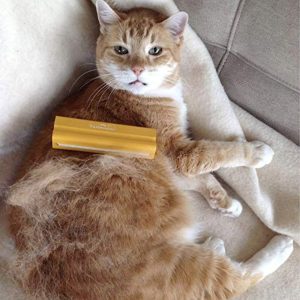
The 5″ EasyGroomer removes loose undercoat from short and medium-haired cats without pulling or scratching. The micro-barbed blade lifts dead hair in the direction of coat growth, which cats tolerate easily. Most lean into the first pass rather than pulling away. A five-minute session during peak shedding removes more loose coat than a week of self-grooming, and the results show immediately in coat condition and reduced shedding on surfaces.