

A horse’s coat is one of the clearest indicators of its overall health. A dull, dry, or patchy coat signals something worth investigating, whether it’s diet, environment, or an underlying health issue. A glossy, healthy coat reflects good nutrition, consistent grooming, and a clean living environment. Here are five practical tips for keeping a horse’s coat in top condition year-round.
Diet
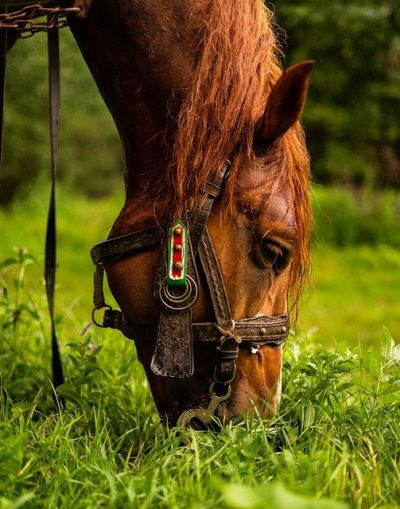
Horse Grazing on Fresh Forage for Coat Health
Fresh pasture grass is one of the best natural sources of Vitamin E for horses.
Nutrition drives coat quality more than any other single factor. According to Kentucky Equine Research, horses need adequate levels of protein, fat, vitamins, and minerals to maintain coat health. Deficiencies in any of these show up in the coat before they show up anywhere else.
Key nutrients for coat health:
When a horse’s coat looks dull despite consistent grooming, diet is the first place to look. Work with a veterinarian or equine nutritionist to assess whether the current feed program is meeting the horse’s individual needs.
Daily Brushing
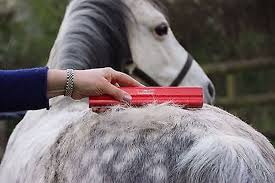
Consistent brushing is the single most impactful grooming habit for coat health. Daily brushing removes dead undercoat, distributes natural oils through the hair, and stimulates blood circulation in the skin. It also removes dirt, sweat residue, and dander that accumulate between washes.
Brushing should be slow, deliberate, and cover the full body including the neck, barrel, hindquarters, legs, and face. If a horse is rolling more frequently than usual, that often signals irritation from sweat or tack pressure. Additional brushing in those areas helps address it before it becomes a skin issue.
Brushing also provides the most reliable opportunity to check the coat and skin for changes: new lumps, bald patches, signs of parasites, sores, or inflammation are easiest to catch during a routine grooming session rather than at a vet appointment.
The 8-inch EquiGroomer removes loose hair, dead undercoat, dirt, and dander across the full body without pulling or damaging the topcoat. Used daily, it keeps the coat in better condition between washes and significantly reduces the buildup that leads to skin irritation.
Want to watch it in action before you try it yourself?
Regular Exercise
Exercise supports coat health in ways that grooming alone can’t replicate. Physical activity stimulates the capillaries and blood vessels that deliver nutrients and oxygen to the skin, supporting healthy hair growth from the follicle up. Exercise also promotes sweating, which helps the body release toxins and distribute the natural oils that give a healthy coat its shine.
A horse that is underexercised often shows it in coat condition before it shows in fitness or weight.
Bathing
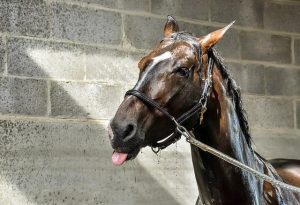
Horse Being Washed for Coat Maintenance
Regular washing removes sweat, dirt, and bacteria that accumulate in the coat between grooming sessions.
Regular washing removes the sweat, bacteria, and environmental debris that daily brushing doesn’t fully address. A complete bath should cover the full body including mane and tail, avoiding the area immediately around the eyes and nostrils.
After the mane and tail have dried, a conditioner formulated for horses helps maintain moisture and reduce tangling. Use warm water and a horse-appropriate shampoo throughout. Rinse thoroughly. Residual shampoo left in the coat attracts dirt and can cause skin irritation.
Avoid over-bathing. Excessive washing strips the natural oils from the coat and skin, leaving the hair dry, brittle, and harder to maintain. After riding, sponging off sweat under the saddle, along the neck, and anywhere tack contacts the body is sufficient between full washes. Removing sweat promptly prevents the skin irritation, sores, and infections that develop when sweat is left to sit against the coat.
Keeping Tack and Environment Clean

Clean Horse Tack Laid Out for Coat Protection
Dirty tack traps sweat and bacteria against the coat, causing irritation and skin breakdown over time.
A clean horse in a dirty environment will not maintain a healthy coat. Dirty tack traps sweat and bacteria directly against the skin every time the horse is ridden, causing friction, irritation, and eventually sores or infection. Saddle blankets, rugs, and any equipment that contacts the coat directly should be cleaned regularly.
The barn environment matters equally. A dry, well-ventilated stall reduces the moisture and ammonia buildup that irritates skin and degrades coat quality over time. After any ride, sponge off or squeegee all sweat from under the saddle, down the neck, and across the body before the horse is returned to its stall.
For post-bath water removal, the 7-inch WaterWisk removes excess water from the full body including bony areas like hips, hocks, and legs where standard scrapers are difficult to use, getting the coat dry faster and reducing the time moisture sits against the skin.