
Hay makes up the majority of a horse’s daily diet, which makes its quality one of the most important factors in a horse’s overall health, energy, and performance. But not all hay is equal, and feeding older or lower-quality hay can leave a horse short on key nutrients like Vitamin A, Vitamin E, biotin, silicon, zinc, and copper.
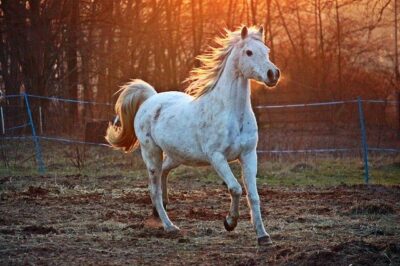
Hay Is Not Just Hay
Choosing the right hay depends on the individual horse. Energy needs, breed, body type, weight, age, and metabolism all factor into what a horse needs from its forage. Understanding the difference between grass and legume hay, along with what’s available locally, makes it easier to match hay to a horse’s specific needs.
Grass Hay vs. Legume Hay
Most hay falls into one of two categories: grass or legume. Common grass hays include bluegrass, orchardgrass, and timothy.
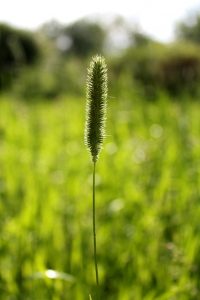
Timothy hay is also a popular feed source for rabbits, guinea pigs, chinchillas, and deer, and can grow up to three and a half feet tall. Beyond its use as forage, timothy supports good digestion and dental health.
Grass hay tends to be lower in protein and energy but higher in fiber. It helps buffer stomach acid and adds roughage without excess calories, though horses often need to eat more of it to feel full. Grass hay may not provide enough nutrition for hard-working horses, growing foals, or pregnant and lactating mares, making it best suited for horses in light work or retirement.
Common legume hays include alfalfa, white clover, red clover, and birdsfoot trefoil.
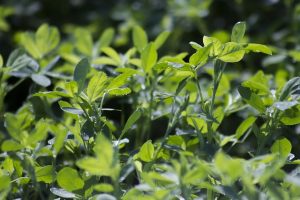
Legume hay is higher in protein, minerals, and calcium, and provides more energy. For horses that are lightly worked or retired, it can be too rich and lead to unwanted weight gain. Legume hay may also require a phosphorous supplement to balance the calcium-to-phosphorous ratio.
What Quality Hay Looks Like
Regardless of type, quality hay should be:
What to Avoid When Selecting Hay
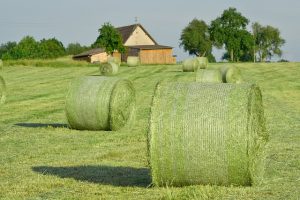
Proper baling matters as much as the hay itself. Avoid hay with more than 15% moisture, since wet hay leads to mold and toxin growth. According to University of Minnesota Extension, moldy hay should never be fed to horses.
Also avoid older hay. Younger hay plants carry more nutrients, and hay with more leaves and fewer stems digests better. Skip hay with visible seed heads or blooms, and steer clear of bleached, yellow, brown, or black-colored hay.
The Bottom Line
Since hay makes up the largest share of a horse’s daily feed, its quality has an outsized effect on health, energy, and coat condition. Harvesting, storage, moisture levels, and age all factor into whether hay is doing its job. A vet or equine nutritionist can help confirm the right hay type and supplement plan for an individual horse.
For horses that get clipped, loose hair fragments trapped under a blanket can cause itching and irritation. The EquiGroomer helps bring trapped loose hair to the surface so it can be brushed away, making it a useful tool to pair with good nutrition for overall coat health.