

Dogs, cats, and horses are built differently, but their legs and paws share some surprising anatomical features. Below is a breakdown of what those features are, what they do, and where they came from.
Digital Pads: Built for Movement
A digital pad sits beneath each toe, cushioning weight and absorbing impact during movement. These pads are made of fatty tissue and thick epidermis, which protects against rough terrain and cold surfaces. They distribute pressure evenly across the foot, which supports quick direction changes and sustained movement over time.
Dew Claws: The Vestigial Extra Digit
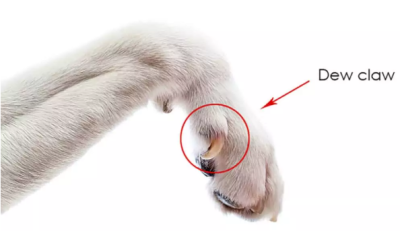
Close-Up of a Dog’s Dew Claw
Dew claws are found in both dogs and cats and serve different purposes depending on the species.
Both dogs and cats may have dew claws, a vestigial feature located on the inner leg above the main paw. In dogs, dew claws can aid in gripping objects or maintaining traction during sharp turns, particularly in active working breeds. In cats, dew claws contribute to climbing and holding prey. Not all dogs have them, and some are removed in young puppies to prevent tearing, breakage, or overgrowth.
Carpal and Metacarpal Pads: Stability and Shock Absorption
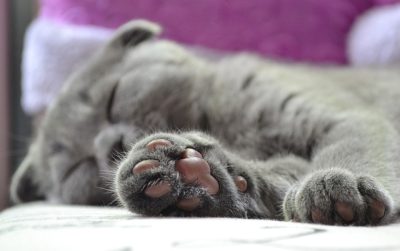
Cat Paw Showing Digital and Metacarpal Pads
A cat's paw pads cushion weight, protect tissue, and provide traction on varied surfaces.
Carpal pads are thick, keratinous growths located near the wrist joint. They act as brakes and shock absorbers during abrupt stops and help animals maintain balance on slick or uneven surfaces. The metacarpal and metatarsal pads are the larger central pads on the front and rear paws respectively, functioning similarly to the soles of human feet. These pads cushion the animal’s weight, protect underlying tissue, and provide insulation from extreme temperatures.
These pads also contain sweat glands, which is the source of the well-known “Frito feet” phenomenon in dogs. According to the American Kennel Club, the corn chip smell comes from naturally occurring bacteria, specifically Pseudomonas and Proteus, that thrive in the warm, moist environment between a dog’s paw pads. The smell is normal in healthy dogs and not a cause for concern unless accompanied by redness, swelling, or excessive licking.
What Horses Have Instead
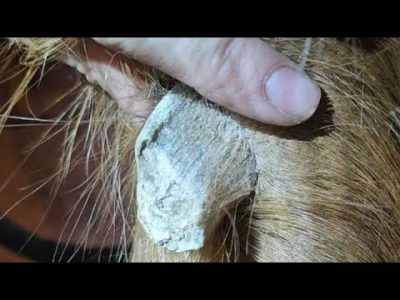
Horse Leg Showing a Chestnut Growth
Chestnuts are unique to each horse and recognized as official identification marks by international equine governing bodies.
Modern horses do not have functional paw pads, but they retain vestigial equivalents. According to Kentucky Equine Research, chestnuts are the vestigial carpal and tarsal pads of the horse’s ancient ancestors, and ergots are the vestigial metacarpal and metatarsal pads.
Chestnuts are hard, callous-like growths found on the inside of a horse’s front legs above the knee and on the hind legs below the hock. They grow slowly and can be trimmed if they become overgrown. Like fingerprints, the outline of each horse’s chestnuts is unique and is recognized by the Federation Equestre Internationale as an official identifying mark.
Ergots are smaller, often hair-covered growths found at the back of the fetlock on each leg. Both chestnuts and ergots are normal and require no treatment under ordinary circumstances.
Why This Matters for Grooming
Understanding a horse’s lower leg anatomy makes routine grooming checks more deliberate and more useful. Chestnuts and ergots can accumulate dirt and debris, and overgrown chestnuts in particular benefit from occasional maintenance. Regular grooming also provides the opportunity to inspect the leg and pastern area for changes in skin condition, sensitivity, or unusual growth patterns before they become larger problems.
The 8-inch EquiGroomer works across the full body including the legs, removing loose hair, dirt, and dander without pulling or damaging the topcoat. For dogs and cats, regular paw checks during grooming sessions are the simplest way to catch early signs of pad irritation, overgrown dew claws, or changes in the Frito smell that might indicate an infection developing.