

If you have started grooming your dog at home, you have probably come across both of these terms. Carding and hand-stripping are not interchangeable and they are not the same process. They address different parts of the coat, work on different coat types, and require different tools. Knowing which one applies to your dog determines whether your grooming session helps or harms the coat long-term.
If you are new to grooming your dog at home, reviewing pet grooming basics first will give you the foundation to understand where carding and hand-stripping fit into a complete grooming routine.
Understanding Your Dog’s Coat
Before choosing between carding and hand-stripping, you need to know what kind of coat your dog has.
Most dogs have one of two coat structures:
Double-coated dogs have a dense undercoat beneath a layer of longer guard hairs. The undercoat insulates and protects the skin in cold weather. It also sheds seasonally, which is what causes the heavy shedding most double-coated owners deal with in spring and fall.
Single-layer coated dogs have only a topcoat with no undercoat beneath it. Breeds like Yorkies fall into this category. Single-layer coated breeds like Yorkies require a different approach, since they have no undercoat to card. This is covered in detail in our post do Yorkies shed and what their coat type needs.
Wire-coated dogs have a harsh topcoat that does not shed the way a double coat does. This coat type is what makes hand-stripping necessary for certain breeds.
What Is Carding?
Carding is the process of removing a dog’s undercoat. The undercoat is the soft, short, downy layer of hair that sits beneath the outer coat. It insulates in winter but needs to be cleared in warmer months so the dog stays comfortable and the coat stays healthy.
Carding grabs, pulls, and removes dead or molted undercoat hair that does not fall out on its own with rising temperatures. Without carding, that trapped undercoat compresses against the skin. This traps heat and creates the conditions for matting, skin irritation, and hot spots.
Carding is typically done using:
Carding is appropriate for dogs that:
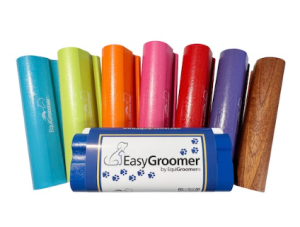
The EasyGroomer is designed specifically for carding. Its micro-barbed edge grabs dead undercoat and removes it cleanly without scratching the skin or pulling the healthy topcoat. It works with the coat’s natural texture rather than against it, which matters especially on dogs with dense seasonal undercoats.
What Is Hand-Stripping?
Hand-stripping is a much different process. Carding removes the undercoat, but hand-stripping removes the topcoat, also called the guard coat. The guard coat is made up of coarser guard hairs that repel water, dust, and dirt while protecting the skin from injury.
Hand-stripping removes guard hairs from their follicles by pulling or plucking them out with the thumb and forefinger, always in the direction of hair growth, while leaving the undercoat untouched. When this is done correctly, the dog should feel no discomfort. Hand-stripping is an alternative to clipping the topcoat with scissors or clippers.
Clipping a wire-coated dog instead of hand-stripping changes the coat texture over time. The coat becomes softer and loses its natural weather-resistant properties. For show dogs or working dogs, this matters.
Not all dogs need hand-stripping. It is more about coat type than breed. Some coats require full stripping twice a year, while others need only seasonal maintenance.
Hand-stripping is typically done on these breeds:
Airedale Terrier, Affenpinscher, Bouvier de Flandres, Cairn Terrier, Dandie Dinmont Terrier, German Wirehaired Pointer, Irish Wolfhound, Jack Russell Terrier, Schnauzer, Scottish Terrier, Wire Fox Terrier, Wirehaired Dachshund, Wirehaired Pointing Griffon
How to Tell Which Your Dog Needs
The clearest indicator of which process you should choose is coat texture. Run your hand through your dog’s coat and feel what is underneath.
If you feel a soft, dense underlayer beneath a longer outer coat, your dog has a double coat and carding is what helps seasonal shedding.
If your dog’s coat is uniformly coarse and wiry with no soft layer underneath, and your dog is one of the wire-coated breeds listed above, hand-stripping is the appropriate method.
If your dog has a single-layer soft coat with no dense underlayer, neither carding nor hand-stripping applies. Regular brushing and the right tool for fine-coated breeds is what that coat needs.
When in doubt, a consultation with a professional groomer before your first session is worth the time, particularly before attempting hand-stripping for the first time.
Why Both Processes Matter for Coat and Skin Health
Whether you are carding or hand-stripping, these processes do more than improve appearance. Both directly support your dog’s skin health in ways that regular brushing alone does not.
Carding and hand-stripping both stimulate the hair follicles, encouraging new healthy hair growth to replace the dead coat being removed. Both processes also stimulate the sebaceous glands, which produce sebum, the natural oil that lubricates the coat and protects the skin.
Consistent carding also prevents the dead undercoat from compressing against the skin, which is one of the leading causes of matting and tangling in double-coated breeds.
The skin is your dog’s largest organ. Its health and condition affect your dog’s comfort, coat quality, and resistance to infection. Regular carding and hand-stripping, done correctly and with the right tools, are among the most effective things you can do to maintain it.