

Cats express themselves through far more than purring or meowing. Most of what a cat communicates happens through body language: tail position, ear movement, and scent signals. Some cats even reciprocate the “cat smile” when their owners slow blink at them. Vocalizations matter too, but they’re often the hardest part of cat language to decipher, since cats are far quieter in tone than dogs and rely more on physical cues to get a message across.
This guide breaks down what a cat is actually saying through sound, tail, ears, and scent.
Cat Vocalizations
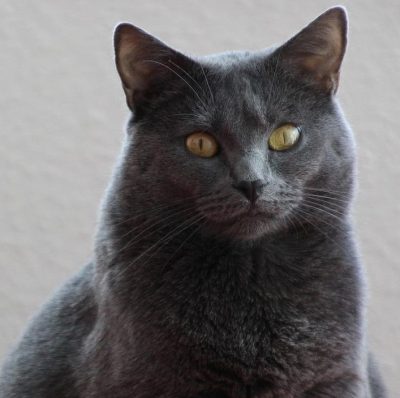
Chartreux Cat with Golden Eyes
Some breeds, like the Chartreux, vocalize far less than others.
Not all cats are equally vocal. Breeds like the Chartreux and Persian tend to be quiet, while Siamese cats are known for being highly talkative. So what is a cat actually trying to say when it meows?
According to PetMD, excessive meowing can signal several different things:
Some cat vocalizations occur at a frequency too high for humans to hear at all, meaning a cat can be “talking” without a person ever noticing.
Body language fills in the rest of the picture, and a cat’s tail is one of the clearest places to start.
Cat Tail Language
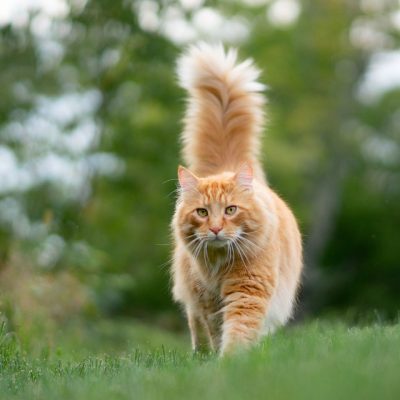
Cat with Tail Held High and Friendly
A tail held high is a cat's way of saying hello.
Cats communicate very differently through their tails than dogs do, and the signals can mean the opposite of what a dog owner might expect. According to PetMD, common tail positions include:
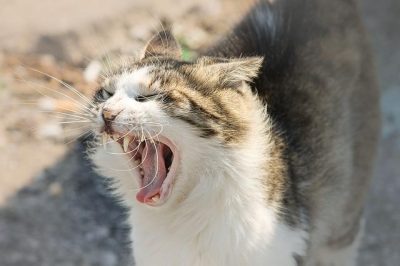
Hissing Cat with Ears Pinned Back
Flattened ears and hissing signal fear or a defensive warning.
A tail tucked between the legs signals a high level of fear, similar to a dog, and is usually paired with hissing, growling, and ears pinned flat against the head. One common misread: if a cat rolls onto its back, that is not submission. Cats don’t display submission the way dogs do. A cat on its back with all paws engaged is preparing to defend itself, not inviting a belly rub.
Cat Ear Language

Ear position is another reliable signal, and cats have considerably more muscle control in their ears than humans do, which is part of why their ears move so expressively. Common ear positions include:
Cat Scent Signals
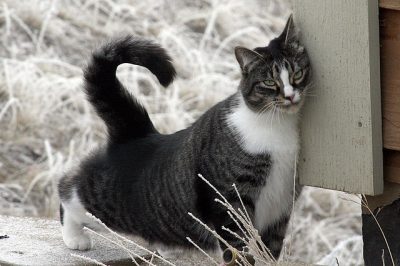
Cat Scent Marking by Rubbing Against Wall
Cheek rubbing deposits friendly, low-intensity scent markers.
Scent marking is one of the most overlooked forms of feline communication. Cat Behavior Associates describes a cat’s scent as its calling card, carrying detailed information for other cats to read. Unlike humans, cats rely heavily on scent glands located across the body, including the:
These glands release pheromones, chemical signals that carry real information for other cats. Feline scent signals are generally used to identify other colony members, define territory, signal reproductive status, self-soothe, bond with familiar animals, or quietly warn other cats away from claimed territory.
Grooming Is Another Way Cats Build Trust
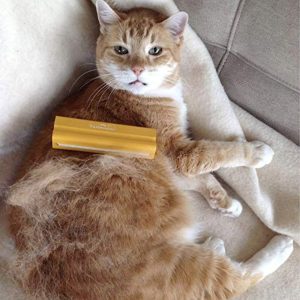
A cat that’s meowing excessively, flicking its tail, or pinning its ears back may simply be stressed or overstimulated. Regular grooming offers a low-stress, repeated form of physical interaction that can help settle an anxious cat over time, much the same way head bunting or a slow blink builds familiarity and trust.
The 5-inch EasyGroomer is sized for cats and designed to gently remove loose hair, dirt, and dander without tugging on fur or irritating delicate skin. For cats already comfortable with handling, a regular grooming routine is an easy way to turn a stressful moment into a calmer one.