
If you’ve ever wondered how much a cat can cost, the answer may surprise you. These five rare cat breeds carry price tags ranging from several thousand dollars to well over $100,000, driven by exotic bloodlines, low fertility rates, and a buyer pool that is small and extremely motivated.
Here’s what each one costs, what makes it rare, and what owning one requires.
#1 Rare Cat: Ashera
The Ashera is the most expensive cat in the world, with a price tag of up to $125,000. It is a crossbreed between an African Serval, an Asian Leopard, and a domestic cat. Many experts consider the Ashera to be a first-generation Savannah (F1), meaning the first generation of offspring from a wild-domestic cross. These cats can weigh up to 30 pounds.
Grooming: The Ashera needs regular brushing to remove dead hair and prevent hairballs. Because of its size and exotic coat, establishing a consistent grooming routine early is important.
#2 Rare Cat: Savannah
The Savannah is the second most expensive cat in the world, with a cost between $10,000 and $50,000. Like the Ashera, it is a crossbreed between an African Serval and a domestic cat. Before 2017, a Savannah named Trouble held the Guinness World Record as the world’s tallest cat at 19 inches from shoulder to tail.
Savannahs are high-energy cats that need significant exercise, and their low fertility rate contributes to their price. Male Savannahs are not fertile after the sixth generation. Note that Savannahs are banned in several US states and parts of the world because they are not classified as domestic animals.
Grooming: The Savannah needs regular brushing to remove loose hair and reduce hairballs. Bathing too frequently can damage its skin and coat quality. Every two months is typically enough, though your veterinarian can advise based on your cat’s specific needs.
#3 Rare Cat: Bengal
According to Purina, the Bengal is a hybrid of an Egyptian Mau and an Asian Leopard Cat. It can cost between $10,000 and $25,000 and its distinctive features include a muscular build, large round eyes, and coat patterns in brown, silver, grey, black, or white. Unlike most cats, the Bengal enjoys water. Ownership restrictions do apply in New York, Seattle, and Hawaii.
Grooming: The Bengal needs regular brushing, particularly during shedding season, to remove dirt and dead hair and prevent ingested hairballs.
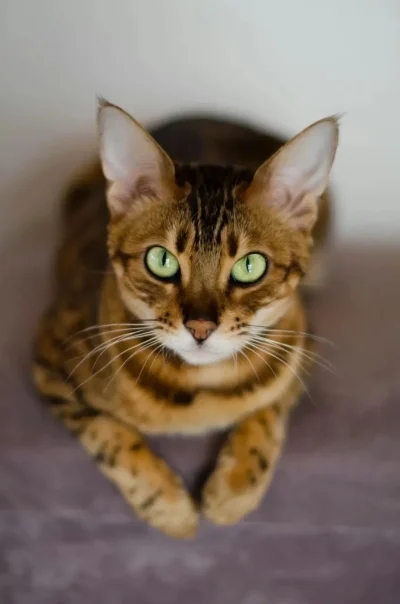
Bengal Cat
The Bengal is one of the most expensive cat breeds in the world, with prices ranging from $10,000 to $25,000.
#4 Rare Cat: Sphynx
The Sphynx originated in Canada in the 1960s through selective breeding with naturally hairless cats, a trait caused by a genetic mutation. Despite appearing low-maintenance, the Sphynx requires consistent care. It is prone to separation anxiety and needs significant attention. It is also prone to irritable bowel syndrome, and annual heart scans are recommended. The cost of these cats can typically cost between $5,000 and $9,800.
Grooming: The Sphynx has very sensitive skin that needs bathing every 20 to 30 days with a mild or waterless shampoo formulated for sensitive skin. Because it has no fur, it loses body heat pretty quickly. Only bathe in a warm space and dry thoroughly, especially in winter.
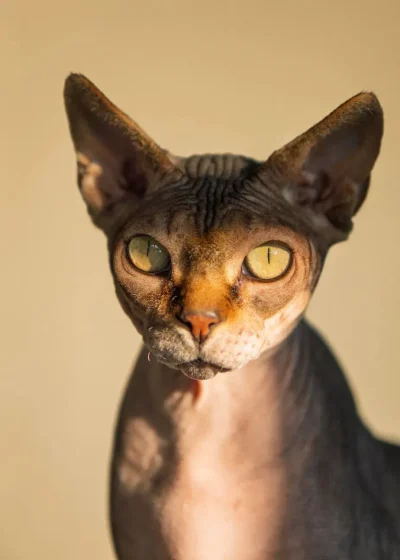
Sphynx Cat
The Sphynx is one of the most expensive cat breeds in the world, with prices ranging from $5,000 to $9,800.
#5 Rare Cat: Persian
The Persian is not only one of the five most expensive cats in the world, typically ranging between $4,000 and $5,500, but it’s also one of the oldest cat breeds with origins dating to the 17th century. It has a flattened face, long flowing coat, and thick fur. Persians are calm and sleep up to 20 hours a day.
Grooming: The Persian needs daily brushing (even just 10 minutes if done consistently) to maintain coat quality and prevent tangles, knots, and hairballs. Bathing every two to three months with a mild or waterless shampoo is sufficient.
Grooming Cats That Cost This Much
If you are spending thousands of dollars on a cat, grooming is not optional. It protects the investment and keeps your cat comfortable year-round.
Most of the breeds above shed, and some of them shed heavily. The Bengal sheds moderately throughout the year with heavier loss during seasonal coat changes. The Persian sheds consistently and mats quickly without daily attention. The Savannah and Ashera, despite their wild lineage, still require regular coat maintenance to control loose hair and prevent skin problems.
The challenge with high-value cats is not just frequency. It’s also using a tool that removes dead hair without pulling, stressing the cat, or damaging the topcoat. A blade that grabs healthy hair is a real problem on a $5,000 Persian.
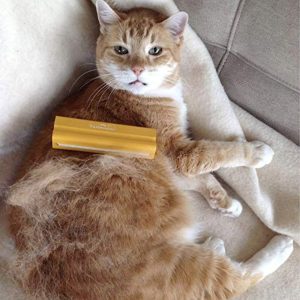
The EasyGroomer works differently: its micro-barbed teeth catch dead and loose hair by the ends, lifting it free without contacting the topcoat or skin. Cats that hate grooming or resist traditional brushes often tolerate it well because there is no dragging sensation.
For Persian and Bengal owners especially, this is the grooming tool worth keeping in the routine year-round, not just during peak shedding.
The EasyGroomer for Cats
The EasyGroomer removes dead and loose hair without pulling. It’s a practical daily tool for high-maintenance coats like the Persian and Bengal, and a gentle option for shorter-coated breeds like the Savannah and Ashera.