

How well do you know horse coat colors? There are a variety of coat colors which all stem from just red and black pigments!
When it comes to horse coat colors, most people recognize black, brown and white horses. But there are a wide variety of colors a horse can show off! Horses also can be recognized as a color breed that is primarily based on their coat color regardless of their breed or genetic pedigree.
Want to test your knowledge first? Click here to access a quiz for horse coat colors!
Many Coat Colors from Just 2 Pigments!
Interestingly, despite the wide variety in equine coat colors, horse hairs only contain two basic pigment colors, red (a reddish-brown color) and black! Every horse has a (dominant) gene for either of these colors which ultimately influences the horse’s specific coat color through gene modification or dilution.
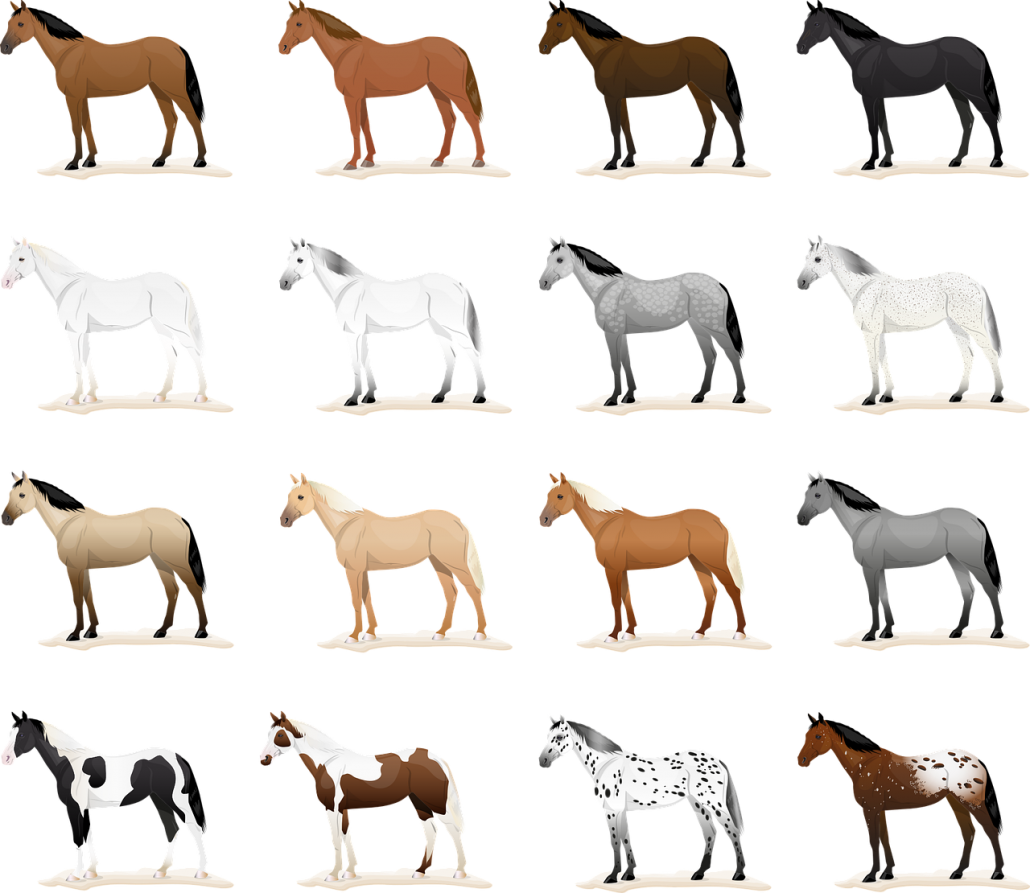
The 9 Most Common Coat Colors
According to the iHeartHorses website, below are the commonly recognized horse coat colors. (Depending on who you speak to, there may be more or fewer “common” horse coat colors!)
CHESTNUT OR SORREL
Features brown that ranges from pale (light, flaxen or blonde) to reddish to deep dark brown (liver chestnut) with no black horse hairs. The mane and tail must be the same color as their coat color.
Sorrel horses are lighter than the Chestnut.
BAY
Brown with black mane, tail and “points” (including the mane, tail, muzzle, tips and rims around their ears and lower legs).
BLACK
May be true black (with no red hues to the coat color) or fade to reddish-brown in the summer. The mane and tail are black and there are no white areas of hair.
PALOMINO
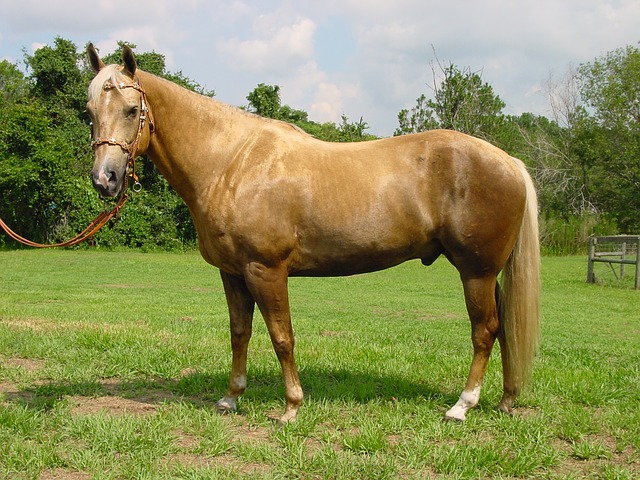
A cream-colored coat with a white mane and tail. While the color comes from the red gene color, palominos possess a genetic dilution mutation resulting in the cream coat color.
BUCKSKIN
The golden coat is produced much like the palomino, but with the base color of bay (instead of red). Buckskin horses also sport black points.
DUN
This equine coat color is unique and not commonly seen. The genetic mutation provides a black dorsal stripe (the back or upper side) and sometimes even black zebra stripes down the legs.
GRAY
These horses are usually born another base color and over time, lose their hair’s pigment resulting in a light gray or even white coat from the grey gene modifier.
ROAN
This horse coat color from the base black color with white hairs scattered throughout the coat. There are 3 typical roan colorings: strawberry or red, bay and blue.
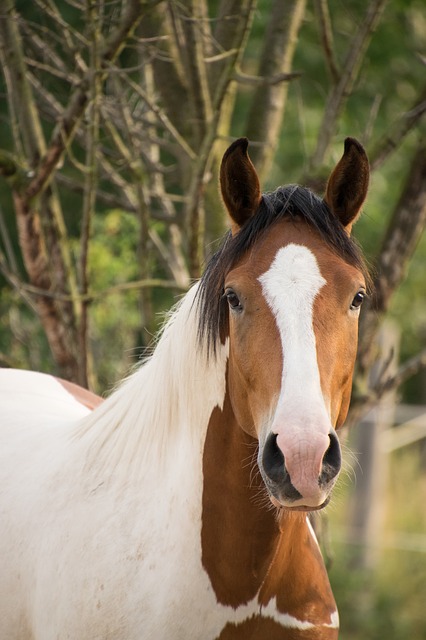
PINTO
Typically multi-colored, typically brown and white or black and white. The pinto color only describes the markings of a base color with scattered white patches.
These common colors can be found in almost any breed. The first four coat colors can be found in all breeds that are not color-based.
The Rarest Equine Coat Color
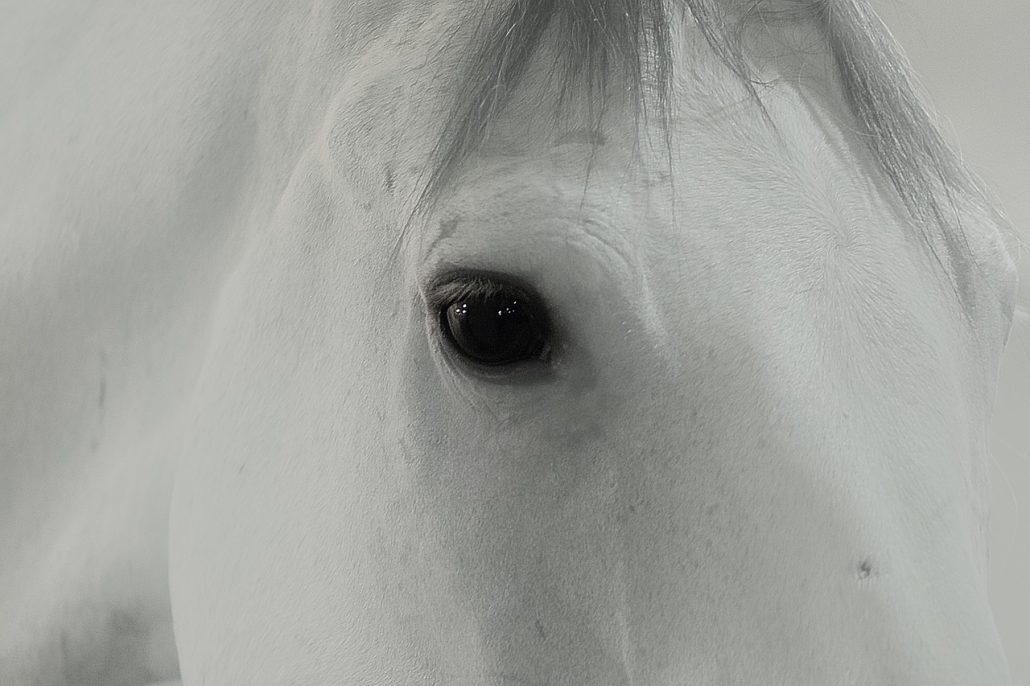
A white horse has the rarest coat color with white hair and primarily pink (or unpigmented) skin. White horses are typically born white with blue or brown eyes. However, the majority of so-called “white horses” are actually grays with a fully white coat of hair.
Want to Know More? Click here for the Practical Hoseman’s Guide to Equine Color Genetics & Coat Color!
How Your Horse’s Coat Type Affects Grooming
Not all horse coats behave the same way, and knowing your horse’s base coat type makes a real difference when shedding season hits.
Double-coated and heavily pigmented horses like bays, roans, and chestnuts tend to carry more undercoat and shed more aggressively in spring. Grays and palominos show dirt and loose hair more visibly against their lighter pigment. Pintos and horses with white patches require extra attention around color boundaries where coat texture can shift.
The right tool removes loose, dead undercoat without disturbing the topcoat. This matters especially for horses whose coat color and shine you’re actively maintaining.
The EquiGroomer: Built for Every Coat Type
Removes loose undercoat easily and painlessly without the pulling or damage to your horse’s topcoat or skin. Works on all coat colors and coat types, year-round.