

How can you accurately measure a horse? Below, learn how to build your own measuring stick and how to get an accurate reading every time.
Equine Measuring Sticks
There is a variety of measuring sticks and tapes that can be used to measure your horse from tack shops and eCommerce platforms like Amazon and Chevy for around $40.
But if you’re even a little handy, you can make your own measuring stick for less than $10 with the instructions below.
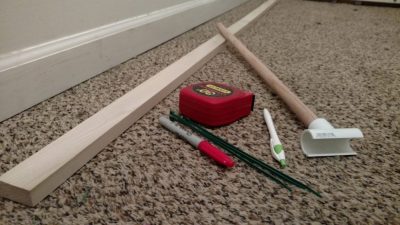
The DIY Horse Measuring Stick: Supplies
Horse Measuring Stick: Directions
Marking the Stick:
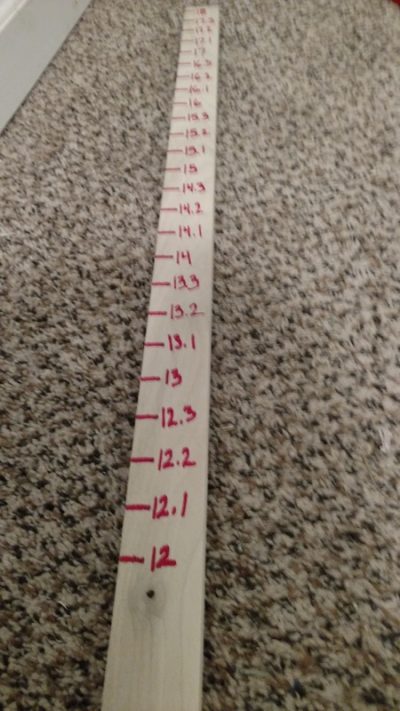
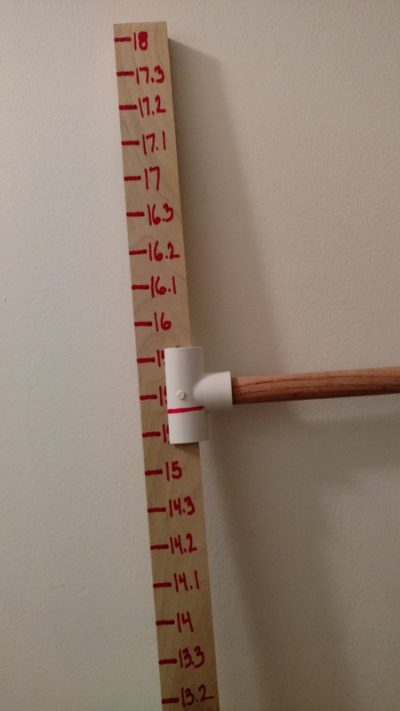
Adding the Measuring Arm:
Accurately Measuring a Horse: 4 Steps
Horses are measured in units called “hands.” (One hand is equal to 4 inches.) Now, let’s go through the four steps to accurately measure your horse.
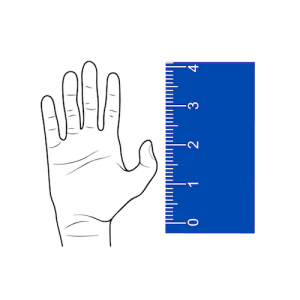
- 1Measure your horse on level ground for the most accurate measurement.
- 2Make sure they are tethered to keep them in place.
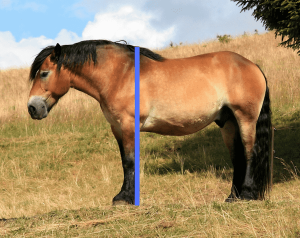
- 3Ensure your horse is standing “square.” This means the two front legs and both hind legs are standing directly next to each other. Your horse will now be standing at their full height.
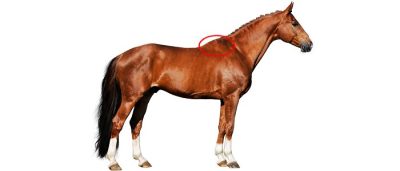
- 4Measure from the ground beside one of your horse’s front hooves to their withers as illustrated below. If you’re using the DIY Measuring Stick, lay the measuring arm across the withers at a 90-degree angle for an accurate measurement.
The withers are the highest point of a horse that maintains a consistent height.
Is It a Horse or a Pony?
There is a height distinction between a horse and a pony. Horses are 14 hands and 2 inches (or 14.2 hands) and taller while ponies are below the 14.2 height. Horses reach their final height around 4 to 5 years of age, so measurement becomes most meaningful once growth has plateaued.
Knowing which side of that line your horse falls on matters beyond terminology. Height determines eligibility for certain competition classes, influences saddle fit calculations, and is sometimes used to calculate medication and supplement dosing by body weight estimates.
Common Horse Measurement Mistakes
Getting an inaccurate reading is easy if one of these four things goes wrong.
Uneven ground. Even a slight slope adds or subtracts from the measurement. Always measure on flat, firm footing.
Horse not standing square. If one leg is forward or back, the topline drops and the measurement comes up short. Take time to set the horse up properly before reading the stick.
Measuring to the neck instead of the withers. The withers are the bony ridge at the base of the mane where the neck meets the back. This is the fixed reference point. The neck rises and falls with the horse’s head position and cannot give a consistent measurement.
Reading the arm at an angle. The measuring arm needs to sit level across the withers at a true 90-degree angle to the stick. A tilted arm gives a false reading in either direction.
Why Horse Height Matters Beyond the Barn
Measuring your horse accurately affects more decisions than most owners expect.
Saddle fit. Tree width and seat size recommendations from most saddle fitters begin with height and weight estimates. An accurate height measurement gives fitters a reliable starting point.
Competition eligibility. Many breed registries and competition organizations have height cutoffs for class eligibility. Ponies and horses often compete under different rules, and the line is exactly 14.2 hands.
Grooming tool sizing. The size of your horse affects which grooming tools work most efficiently across the body. A 16-hand Warmblood and a 13-hand pony require different reach and stroke length during grooming. Knowing your horse’s height helps you select tools sized to cover ground efficiently without overworking the smaller or more sensitive areas.
The 8″ EquiGroomer is the standard choice for full-sized horses. The wider blade covers more surface area per stroke, which matters on a 15-to-17-hand horse with a heavy coat. For ponies and smaller horses, the 5″ EasyGroomer gives better control on a narrower frame.