

Emergencies happen, including natural disasters, and when they do, a horse depends on its owner to be prepared. Whether an injury happens on the trail, in the barn, in the paddock, or in the show ring, having the right supplies on hand can make a real difference in how quickly and effectively help arrives.
Building a few well-stocked kits ahead of time takes the guesswork out of a stressful moment.
Building a First Aid Kit
In the middle of an emergency, it’s easy to forget even simple things while managing stress and adrenaline. A fully stocked, easy-to-find first aid kit saves critical time.
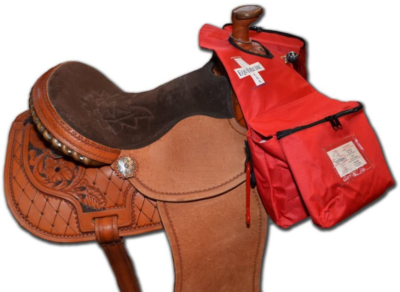
A few kits, kept in different places, cover the most likely scenarios:
Smartphone first aid apps are useful, but only when cell service is available. A printed reference sheet, kept with each kit, ensures the information is accessible even without a signal. The Complete Equine Emergency Bible is a helpful print resource to keep on hand for the same reason.
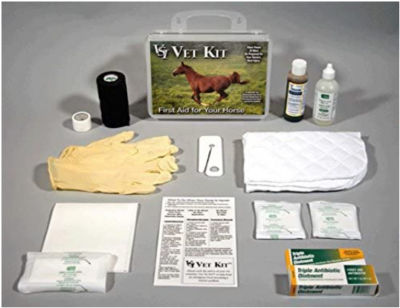
Pre-built kits are available for purchase, but many horse owners prefer to assemble their own using trusted checklists and resources, including:
Don’t Forget the Trailer
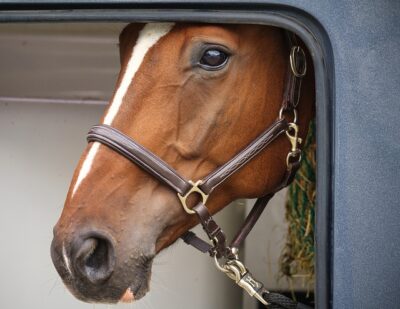
Anyone transporting a horse should also keep a separate trailering emergency kit on hand. A breakdown on the road is a different kind of emergency, and one that’s just as important to prepare for.
A trailering kit should include:
Keeping the horse’s first aid kit inside the trailering kit means one less thing to remember when time matters most. Being prepared can mean the difference between a quick fix on the road and hours stranded, particularly in extreme heat or cold.
Be Ready Before the Emergency Happens

Preparing before an emergency, whether it’s an injury or a natural disaster, gives a horse the best chance at fast, effective care. It’s worth building these kits now, before they’re needed.
A well-groomed coat also plays a role in spotting problems early, from skin irritation to injuries hidden under a thick coat. The EquiGroomer makes it easier to keep a close eye on a horse’s skin and coat between vet visits, in addition to keeping shedding under control.