

Horses have been part of human life for thousands of years, yet most people (even experienced horse owners) are surprised by a few of the facts below.
Here are eight things worth knowing about horses.
Horses Sleep Standing Up (and Lying Down)
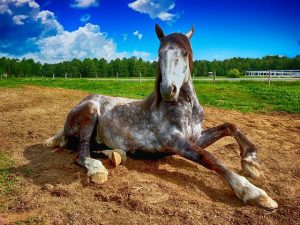
Horse Lying Down to Sleep
Horses sleep standing up but must lie down for deep, restorative sleep.
Horses can doze standing up, thanks to a passive stay apparatus in their legs that allows them to rest without falling. But standing rest is light sleep only. For a full, restorative sleep cycle, horses need to lie down, which is something several factors can prevent, including limited space, uncomfortable footing, weather, or physical discomfort. A horse that never lies down is often a horse that isn’t sleeping well.
Domestic Horses Live Significantly Longer Than Wild Ones
The average domestic horse lives 25 to 30 years. Wild horses average around 15 to 16 years, roughly half, because they lack access to consistent nutrition, veterinary care, and shelter. Advances in equine medicine and nutrition have pushed domestic horse lifespans considerably further than they were even a generation ago.
The Most Popular Horse Breed in the United States
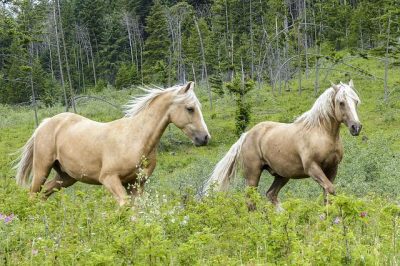
Two Quarter Horses Running in a Field
The Quarter Horse has been the most registered horse breed in the United States for decades.
The American Quarter Horse is the most registered horse breed in the United States and has held that distinction for decades. The breed is valued for its versatility. Quarter Horses are ridden comfortably by first-time riders and competed at the highest levels by professional horse people.
Horses Are Herbivores Built for It
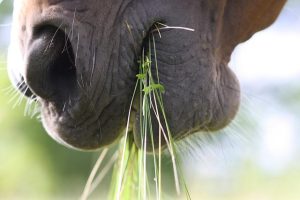
Horse Grazing on Green Grass
Horses are herbivores whose entire anatomy, from teeth to digestive system, is built for a plant-based diet.
Horses are herbivores, and their anatomy reflects that completely. Their grinding teeth are built to process plant material. Their eyes are positioned on the sides of their head, giving them a wide field of vision to detect predators while grazing. Their digestive system is designed for near-constant forage intake rather than large, infrequent meals.
The Horse’s Surprising Relative
If this one is new information, that’s expected. The rhinoceros is in the same taxonomic order as the domestic horse. Both are odd-toed ungulates, meaning hoofed mammals with an odd number of toes. The zebra, donkey, and ass are also members of this group, making them closer relatives of the horse than most people realize.
A Horse’s Teeth Reveal Age and Sex
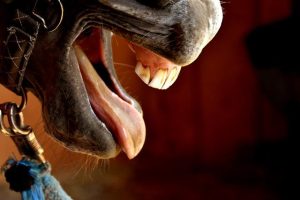
Horse Open Mouth Showing Teeth and Tongue
A horse's teeth reveal both its age and, in some cases, its sex.
Male horses typically have 44 teeth; females have 36 to 44. Beyond sex, a horse’s teeth tell an experienced handler a great deal about age. The shape of the tooth surfaces, the depth of the indents, the angle at which upper and lower teeth meet, and the wear patterns on permanent teeth all shift predictably over time and can be used to estimate a horse’s age with reasonable accuracy.
Horses Recognize People Two Different Ways
Studies have shown that horses use separate sensory pathways to identify and remember individual people. A horse can recognize a familiar person by voice alone, and can also identify individuals using only sight and smell, independently of sound. A horse that recognizes its owner’s voice at a distance is responding to genuine memory, not just proximity.
The Flehmen Response Isn’t Laughing

Horse Performing the Flehmen Response
The flehmen response helps horses direct airborne scents to a specialized olfactory organ.
When a horse curls its upper lip and raises its head, it is performing what’s called the flehmen response. This is a behavior that directs airborne scents toward the vomeronasal organ, a specialized olfactory structure in the nasal cavity that signals the brain to trigger physiological and behavioral reactions. Stallions use it most visibly when mares come into season, but mares also use it to recognize their foals, and horses of both sexes use it to identify potential predators and even locate water sources.
Grooming Keeps You Connected to Your Horse
Each of the facts above reflects how much horses perceive, remember, and respond to the people who handle them. That relationship is built through consistent, repeated contact. Grooming is one of the most direct ways to maintain it.
Regular grooming also creates the opportunity to monitor coat condition, check for skin irritation, and catch early signs of soreness or health changes before they become larger problems. The 8-inch EquiGroomer removes loose hair, dirt, and dander from a horse’s coat efficiently without pulling or damaging the topcoat, a practical tool for the kind of hands-on contact that makes a real difference in both coat health and the horse-handler relationship.