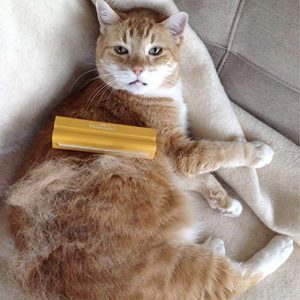

If your cat has coughed up another hairball this week, you have probably already tried the hairball-formula food. Maybe there is a malt-based gel or a box of hairball treats sitting in the cabinet right now. And yet here you are, cleaning the carpet again.
That is because hairball food and remedies are built to help hair move through your cat’s digestive system once it is already swallowed. None of them do anything about how much loose hair your cat is swallowing in the first place. Understanding where that hair comes from changes what you reach for next.
Why Cats Get Hairballs in the First Place
A cat’s tongue is covered in tiny, backward-facing hooks called papillae. They work like a built-in comb every time your cat grooms, catching loose and dead hair and pulling it free. Most of that hair gets swallowed and passes through the digestive tract in the stool without any trouble at all.
Hairballs happen when there is simply more loose hair coming off the coat than the digestive tract can clear at once. That hair collects in the stomach instead of moving through, and eventually comes back up. Long-haired and double-coated cats produce more of this loose undercoat during self-grooming, which is why breeds like Maine Coons, Persians, and Ragdolls tend to deal with hairballs more often than short-haired cats.
Without the seasonal daylight shifts that trigger sharp shedding peaks outdoors, many indoor cats shed at a steady, lower rate all year round instead of in two intense bursts. This results in a consistent supply of loose hair to swallow every time they groom, not just during a spring or fall shed.
An occasional hairball, roughly once a month or less, is considered normal for most cats. More frequent than that, or paired with a loss of appetite, repeated unproductive retching, or lethargy, is worth a call to the vet rather than another home remedy. That pattern can point to a blockage risk that grooming alone will not resolve.

Why Hairball Food and Remedies Only Address Half the Problem
Hairball-control diets typically add fiber to help hair move through the gut once it has been swallowed. Malt pastes and gels work as a mild lubricant for the same reason. Both are useful for moving hair that is already inside your cat, and neither one reduces how much loose hair is sitting on the coat waiting for the next grooming session.
Food and gels manage the hair that already made it past the first step. They do nothing about the hair that is still coming.
What Helps: Removing the Hair Before It Is Swallowed
A deshedding tool puts you ahead of the problem. Closely spaced teeth reach past the topcoat and lift loose, dead undercoat hair out before it works its way free on its own.
This is different from a standard slicker brush or comb, which mostly catches hair that is already loose enough to detach on contact. It does not reach the undercoat where the next wave of shedding hair is sitting, which is why those tools can leave just as much hair for your cat to swallow as before.
Pay close attention to your technique. Use short, light strokes in the direction the fur grows. Do not press hard or dig in. Removing loose undercoat regularly means there is meaningfully less of it available to swallow at the next self-grooming session, which is the direct lever on hairball frequency that diet and gels cannot reach on their own.

Is It Safe to Use for Hairball Prevention?
Safety ultimately comes down to how the tool is built and how it is used. The teeth are shaped to catch loose hair shafts, and with light pressure they should not scratch or pull at hair that is still anchored.
Move in the direction the fur grows. Use lighter pressure over the belly and legs, where the skin sits closer to the surface. Skip any area with a cut, scab, hot spot, or matted fur until that is addressed separately. Most cats tolerate this well once they feel the difference between a tool that lifts dead hair and one that has been catching and tugging.
Building a Hairball Prevention Routine
During peak shedding windows, spring and fall for cats with any outdoor access, aim for two to three sessions a week to keep pace with what is coming loose. Outside of those windows, once a week is usually enough to stay ahead of a backlog. Indoor cats with a steady shedding pattern often do well with a consistent weekly session year-round, since their coat is not really following a season.
Some amount of hairballs is a normal part of how cats groom themselves. The goal is fewer of them and further apart, by reaching the loose undercoat before your cat’s next grooming session turns it into the next one.
If hairballs are showing up regularly and hairball food or gels have not moved the needle, looking into a deshedding tool built to reach the undercoat is the next step worth taking, not another remedy that treats the same symptom the last one did.